1) Vocabulário Base
Leia as palavras ou expressões abaixo para ampliar seu vocabulário.
| Termo | Pronúncia | Tradução | Exemplo |
|---|---|---|---|
| wealth | uélth | riqueza | Wealth comes from good habits. |
| save | sêiv | economizar | I save money every month. |
| earn | ârn | ganhar (dinheiro) | He earns money from his work. |
| spend | spénd | gastar | Do not spend more than you earn. |
| invest | invést | investir | They invest in simple ideas. |
| debt | dét | dívida | Debt can bring problems. |
| habit | hábit | hábito | Saving is a good habit. |
| goal | gôul | objetivo | She has a clear goal. |
| advice | édváis | conselho | I follow good advice. |
| future | fiútcher | futuro | Think about your future. |
2) Prática Assistida
Agora leia o texto abaixo em voz alta da maneira que conseguir, o professor irá corrigir as pronúncias necessárias.
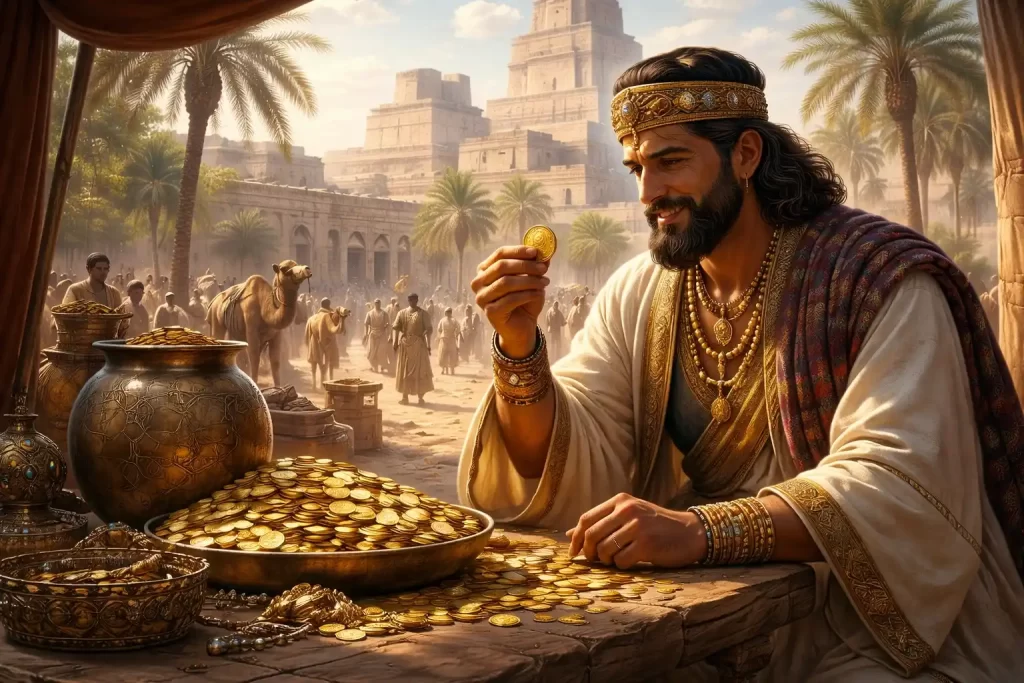
The book The Richest Man in Babylon was written by George S. Clason.
It is a famous book about money and life lessons.
The book uses short stories.
These stories happen in ancient Babylon.
Babylon was a rich city.
People traded goods, gold, and services.
The stories teach simple rules about money.
They are easy to understand and remember.
The main character is Arkad.
He is the richest man in Babylon.
At the start, Arkad is not rich.
He is a normal worker like his friends.
Arkad learns how to manage money.
He learns from mistakes and good advice.
His friends ask him a question.
They ask how he became rich.
Arkad explains his secrets.
His ideas are simple but powerful.
The first lesson is about saving.
Arkad says you must save part of your money.
He teaches to save at least ten percent.
This means one coin from every ten coins.
You must pay yourself first.
Saving comes before spending.
This habit helps you build wealth.
Small amounts grow over time.
The second lesson is about control.
You must control your expenses.
Many people spend all they earn.
They feel poor even with good income.
Arkad says needs and wants are different.
Not everything you want is necessary.
When you control spending, money stays with you.
This gives peace and security.
The third lesson is about investing.
Saved money must work for you.
Money should create more money.
This is the idea of investment.
Arkad warns about bad investments.
Quick profit can bring loss.
He says to learn before investing.
Ask advice from wise people.
Good advice protects your money.
Bad advice can destroy it fast.
Another lesson is about debt.
Debt is a heavy problem.
Many people live for debt.
They borrow money to buy things.
Arkad teaches to avoid debt.
He says freedom comes without debt.
Pay debts slowly and carefully.
Do not create new debts.
The book also talks about goals.
A clear goal gives direction.
Without a goal, money disappears.
With a goal, money has purpose.
Arkad believes in long-term thinking.
Wealth grows with time and patience.
He also talks about work.
Work is the source of income.
You must improve your skills.
Better skills bring better income.
The stories show common people.
They face fear, doubt, and mistakes.
This makes the lessons real.
Anyone can apply them.
The book does not teach magic.
It teaches habits and discipline.
Saving, controlling, and investing are habits.
Habits shape your future.
The language of the book is simple.
The ideas are old but still useful.
Today, people still face money problems.
The same rules still work.
The main message is responsibility.
You are responsible for your money.
The book shows hope.
Anyone can change their financial life.
Small steps make big change.
Consistency is more important than speed.
The Richest Man in Babylon is timeless.
It teaches wisdom in simple stories.
It is not only about money.
It is about choices and discipline.
The book encourages action.
Learning is nothing without action.
The lessons are clear and practical.
They fit modern life easily.
The story of Arkad inspires readers.
It shows success is possible.
Money is a tool.
Use it wisely and calmly.
The future depends on today’s habits.
This is the heart of the book.
3) Compreensão Ativa
Responda as perguntas abaixo para praticar a compreensão.
- O que você entendeu de um modo geral sobre o texto?
- Agora releia o texto e fale para o professor todas as palavras ou expressões que você não conhece ou não entendeu o significado corretamente.
- Quem é Arkad e por que ele é importante na história?
- Qual é a principal regra sobre economizar dinheiro apresentada no texto?
- Por que o livro fala sobre controlar gastos?
- O que o autor diz sobre investir dinheiro?
- Qual é o problema das dívidas segundo o livro?
- Por que ter objetivos financeiros é importante?
- O livro ensina truques rápidos para ficar rico? Por quê?
- Qual é a mensagem principal do livro para a vida moderna?
4) Conversação Aplicada
Now, let’s talk in English about what you read. Try to answer even with simple words — the goal is to speak!
- What lesson did you like the most?
- Do you save money today? Why or why not?
- What is hard about controlling expenses?
- Do you think debt is common today?
- How can money work for you?
- What is one financial goal you have?
- Do you ask advice before big decisions?
- Is patience important for success? Why?
- Can good habits change your future?
- Would you recommend this book to a friend?
Parabéns! Você praticou inglês de verdade com um clássico sobre dinheiro e vida. Aprendeu vocabulário útil, leu uma história real e falou sobre hábitos importantes — sem complicação e sem gramática chata. 💰📘
Quer acelerar ainda mais seu inglês e falar com confiança sobre temas reais? Agende agora uma aula com a Fluência Rápida e veja seu inglês crescer como o ouro da Babilônia!